
How to Highlight Building Features with LED Wall Lights
LED wall lights are one of the most effective ways to highlight building features and enhance architectural design at night. Whether used on commercial facades, villa exteriors, hotel entrances, garden walls, or feature walls, the right LED wall lighting can create depth, texture, and a more attractive nighttime appearance.
Compared with ordinary outdoor lighting, LED wall lights are not only used for brightness. They are also an important part of architectural lighting, helping designers emphasize key structures such as columns, textured walls, entrances, balconies, and facade details.
Why LED Wall Lights Are Ideal for Architectural Feature Lighting
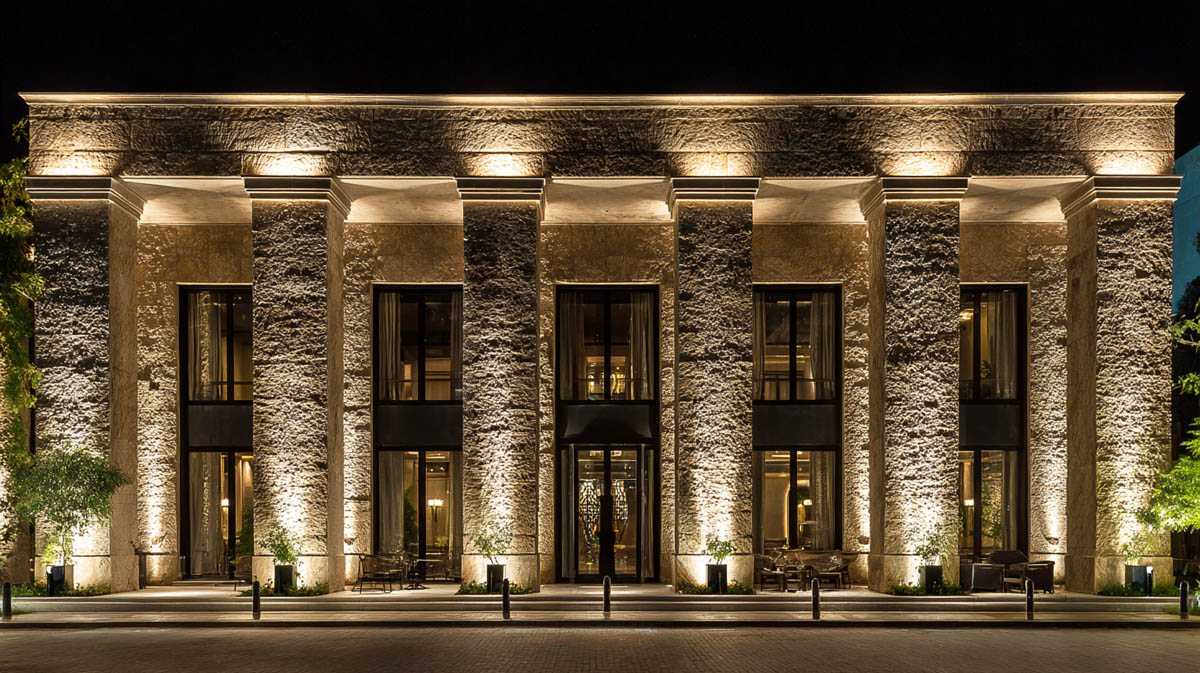
LED wall lights are widely used in architectural lighting because they provide focused illumination, clean beam patterns, and long-term energy efficiency. They can make a plain wall look more dimensional and help important building details stand out after sunset.
For hotels, villas, resorts, and commercial buildings, LED wall lights can improve the overall visual impression of the property while also increasing safety around entrances, pathways, and outdoor activity areas.
Best Building Features to Highlight with LED Wall Lights
Textured Walls
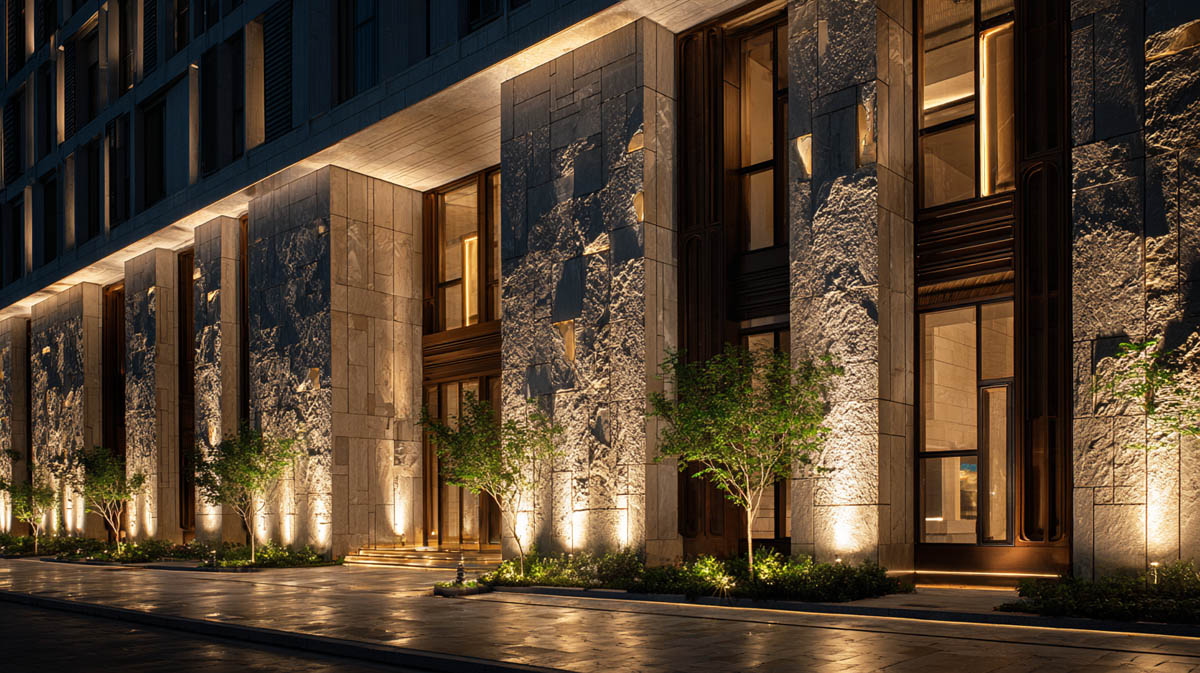
Stone walls, brick walls, concrete surfaces, and decorative panels can look much more attractive when illuminated with wall lights. Light and shadow help reveal the texture of the material and create a premium architectural effect.
Columns and Pillars
Columns are perfect for vertical lighting effects. Up and down wall lights can emphasize height, symmetry, and structure, especially on hotel entrances, villas, and commercial facades.
Entrances and Doorways
Entrance lighting creates the first impression of a building. LED wall lights can make the entrance more welcoming while improving visibility and safety.
Accent Walls
Accent walls are often used in modern architecture to create a focal point. LED wall lights can highlight these areas and make the design more visually impressive at night.
Balconies and Outdoor Living Areas
Wall lights can also be used around balconies, patios, terraces, and outdoor lounges to create a comfortable and elegant atmosphere.
Choosing the Right LED Wall Light Style
Up and Down LED Wall Lights
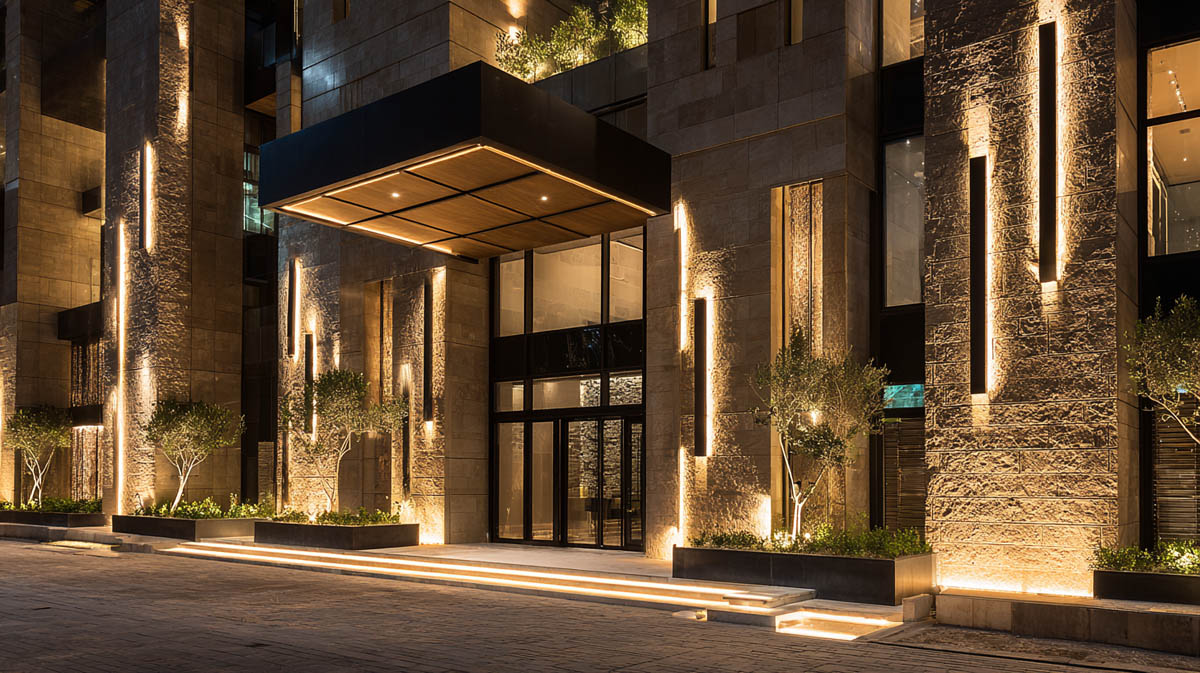
Up and down wall lights are one of the most popular choices for highlighting building features. They create vertical light beams that add depth and structure to the facade.
They are especially suitable for modern villas, hotel entrances, commercial buildings, garden walls, and exterior columns.
Single Direction Wall Lights
Single direction wall lights provide a softer and more controlled lighting effect. They are ideal for pathways, side walls, courtyards, and areas where glare control is important.
Adjustable Wall Lights
Adjustable wall lights allow the beam direction to be changed according to the project requirement. They are useful when the lighting needs to focus on a specific wall texture, sign, column, or decorative detail.
RGB and DMX Wall Lights
For projects that require dynamic lighting effects, RGB or DMX-controlled wall lights can create color-changing scenes and programmed lighting effects. They are often used for commercial facades, entertainment spaces, resorts, and special event lighting.
How Beam Angle Affects the Lighting Result
Beam angle is very important when using LED wall lights to highlight architectural features. Different beam angles create different visual effects.
| Beam Angle | Lighting Effect | Recommended Use |
|---|---|---|
| Narrow Beam | Strong and focused light | Columns and vertical features |
| Medium Beam | Balanced wall washing effect | Facade walls and entrances |
| Wide Beam | Soft and broad illumination | Large walls and outdoor areas |
For feature lighting, narrow or medium beam angles are usually preferred because they create stronger contrast and more noticeable architectural effects.
Choosing the Right Color Temperature
Color temperature affects the mood and appearance of the building. For most architectural lighting projects, warm white and neutral white are the most common choices.
- 2700K-3000K: Warm and comfortable, ideal for villas, hotels, resorts, and residential buildings.
- 4000K: Clean and modern, suitable for commercial buildings and contemporary facades.
- RGB / RGBW: Suitable for dynamic lighting, events, holidays, and entertainment areas.
For luxury outdoor projects, 3000K warm white is often the best choice because it creates an elegant and welcoming atmosphere.
Placement Tips for Better Feature Lighting
Correct placement is just as important as choosing the right fixture. Poor placement can create glare, uneven lighting, or weak visual effects.
Use Symmetry on Formal Facades
For entrances, columns, and large building facades, symmetrical placement creates a clean and professional appearance.
Highlight the Most Important Features First
Not every wall needs to be illuminated. Focus on entrances, textured walls, columns, signs, and key architectural elements.
Avoid Excessive Brightness
Feature lighting should enhance the architecture, not overpower it. Too much brightness can reduce visual comfort and make the building look harsh.
Combine Wall Lights with Landscape Lighting
For the best result, LED wall lights should work together with garden lights, pathway lights, tree uplights, and facade lighting.
Common Applications of LED Wall Lights
LED wall lights are suitable for many outdoor architectural lighting projects, including:
- Hotel facade lighting
- Villa exterior lighting
- Resort entrance lighting
- Commercial building lighting
- Garden wall lighting
- Accent wall lighting
- Outdoor corridor lighting
- Landscape feature lighting
Material and Waterproof Requirements
Outdoor LED wall lights must be designed for long-term use in different weather conditions. For outdoor architectural lighting projects, it is important to choose fixtures with durable materials and reliable waterproof protection.
Recommended features include die-cast aluminum housing, powder-coated finish, tempered glass lens, stainless steel screws, and IP65 or higher waterproof rating.
Smart Control and DMX Lighting Options
For modern architectural projects, smart control systems can improve flexibility and user experience. Depending on the project type, LED wall lights can be controlled by remote control, smart home systems, timers, or DMX controllers.
DMX control is especially useful for RGB wall lights and commercial facade lighting because it allows synchronized color changes, scene control, and dynamic lighting effects.
Project Design Example
A modern hotel or villa facade can use up and down LED wall lights on columns, warm white accent lighting on textured walls, and landscape lighting around trees and pathways. This combination creates a complete nighttime environment instead of relying on one single lighting method.
By layering wall lights with garden and facade lighting, the building becomes more attractive, safer, and more memorable after dark.
FAQ About Highlighting Building Features with LED Wall Lights
What type of LED wall light is best for building features?
Up and down LED wall lights are often the best choice for highlighting columns, textured walls, and modern facades because they create strong vertical lighting effects.
What color temperature is best for architectural wall lighting?
3000K warm white is widely used for hotels, villas, resorts, and luxury outdoor spaces. 4000K can be used for more modern commercial buildings.
Can LED wall lights be used for commercial facades?
Yes. LED wall lights are commonly used for commercial facade lighting, hotel exteriors, shopping centers, office buildings, and public spaces.
Are RGB wall lights suitable for architectural lighting?
Yes. RGB or DMX wall lights are suitable for projects that require dynamic color effects, such as resorts, entertainment spaces, and commercial buildings.
What waterproof rating is recommended for outdoor wall lights?
IP65 or higher is recommended for outdoor wall lights to ensure reliable performance in rain, dust, and humid environments.
Conclusion
LED wall lights are an excellent solution for highlighting building features and creating attractive architectural lighting effects. By choosing the right fixture style, beam angle, color temperature, placement, and control system, you can transform ordinary walls into impressive nighttime focal points.
For hotels, villas, resorts, and commercial buildings, a well-designed LED wall lighting system can improve aesthetics, safety, and overall project value.
Related Solution
Outdoor Wall Lighting Solution
Explore LED wall lighting solutions for architectural facades, accent walls, villas, hotels, and commercial outdoor projects.


